Floral Butterfly Embroidery Design Review
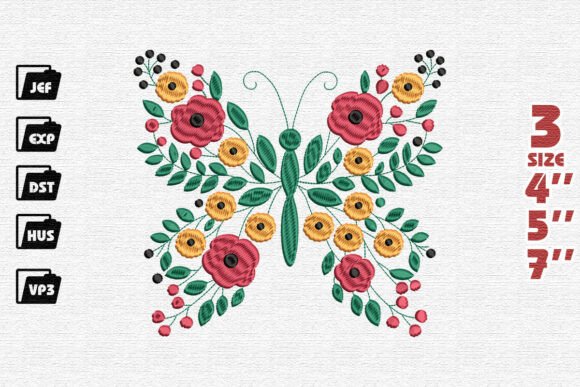
As a professional embroidery designer who has spent years translating digital files into tangible brand assets, I approach every new machine embroidery design with a critical eye. The goal is never just to make something pretty; it is to create a functional asset that elevates a small business's visual identity. Today, I am reviewing the Floral Butterfly Embroidery, a vibrant design depicting a butterfly whose wings are intricately composed of various floral elements. With bold red flowers, golden-yellow blossoms, green leaves, and small red and black berries, this piece falls under the Bugs category but transcends simple insect imagery to become a statement of craftsmanship.
First Impressions: A Blend of Nature and Branding
When I first loaded the digital embroidery file for Floral Butterfly Embroidery, the immediate impression was one of organic luxury mixed with playful energy. The combination of bold reds and golden-yellows creates a high-contrast palette that demands attention without feeling chaotic. For small business owners looking to stand out on a crowded shelf or in a local market, this design offers a distinct visual personality. It feels both rustic and premium, making it an excellent candidate for brands that want to project a handmade, artisanal vibe while maintaining a level of polish associated with established companies.
The intricate composition of the wings, filled with floral details rather than standard scales, suggests a design that rewards closer inspection. This is crucial for brand identity. In a world of flat, screen-printed logos, an embroidered patch with this level of depth signals quality. It tells the customer that the business cares about the details, from the stitching on their staff uniforms to the packaging of their products.
Evaluating Real-World Business Applications
The true test of any embroidery file is its versatility across different merchandise types. Here is how I see the Floral Butterfly Embroidery performing in actual commercial scenarios:
- Staff Uniforms and Aprons: For a boutique bakery, florist, or café, placing this design on the chest of a chef's apron or the pocket of a work shirt creates an instant connection with nature and freshness. The green leaves and red flowers evoke the colors of fresh produce and blooms, reinforcing the business's core offering.
- Custom Apparel and Tote Bags: As a tote bag design, the large scale of the butterfly allows the floral elements to pop against canvas. This is perfect for eco-friendly brands or local shops selling reusable bags as part of their small business merch line. The durability of the embroidery ensures the logo survives frequent use.
- Embroidered Patches: One of the most cost-effective ways to use this design is by creating woven or embroidered patches. These can be sold individually as collectibles or attached to denim jackets, backpacks, and hats. The "Bugs" theme appeals to collectors, while the floral aspect broadens the appeal to general craft enthusiasts.
- Cap Embroidery: While caps require careful sizing, the symmetrical nature of the butterfly makes it a strong contender for front-panel placement. However, the density of the floral wings must be managed carefully to avoid puckering on curved surfaces.
- Product Packaging Accents: Imagine a small box of handmade soaps or candles sealed with a fabric tag featuring this design. It transforms a standard product into a gift-worthy item, increasing perceived value and encouraging social media sharing.
Strategic Considerations for Production
While the Floral Butterfly Embroidery is visually stunning, applying it to commercial embroidery projects requires specific technical considerations. As a designer, I advise my clients to pay close attention to the following areas before mass production:
Stitch Density and Fabric Texture
The description highlights "intricately composed" wings with multiple flower types. High detail often translates to high stitch density. On heavy fabrics like denim or canvas, this works well. However, on lightweight materials like silk or thin cotton shirts, the weight of the thread could cause the fabric to pucker or distort. Always test the design on the exact fabric texture you intend to use. If the density is too high for a delicate garment, consider simplifying the outline or using a lighter thread weight.
Color Contrast and Visibility
The design features bold red flowers and golden-yellow blossoms. These vibrant thread colors look fantastic on dark backgrounds like navy blue, charcoal, or black. They provide excellent contrast for cap embroidery or dark uniforms. Conversely, on white or cream fabrics, the red and yellow may blend slightly if the background stitches are not properly isolated. Ensure the design includes a solid underlay to make these colors pop against light substrates.
Hoop Size and Placement
Before committing to a run, confirm the required hoop size. Intricate designs often need more space to prevent the machine arm from hitting the stabilizer or the hoop edge. If you plan to use this as a sleeve detail or a small accent on a hat, verify that the design does not lose its definition when scaled down. Small details, like the tiny red and black berries mentioned in the description, might disappear if the design is shrunk too much for a mini-patch.
Brand Impact and Customer Trust
Using a high-quality design like Floral Butterfly Embroidery directly influences how customers perceive your brand. In the realm of handmade product sales, consistency is key. When your logo appears on a tote bag, a staff apron, and a promotional patch with the same level of care, it builds trust. Customers associate the tactile quality of the embroidery with the quality of your services or goods.
This design specifically aids in buyer engagement because it invites interaction. People love to touch embroidered items; they feel the texture of the raised petals and the sheen of the thread. This sensory experience creates a memorable brand moment that a flat print cannot achieve. Furthermore, the nature-inspired motif aligns perfectly with current trends favoring sustainability and organic aesthetics, which can resonate deeply with eco-conscious consumers.
Designer Checklist Before You Stitch
To ensure the best results for your finished product, follow this practical checklist derived from my experience with similar complex designs:
- Test in Black and White: Before running colored threads, stitch the design in a single color (usually black) to check for registration issues, spacing problems, or areas where the needle might break due to tight turns.
- Verify Commercial Licensing: Always confirm that the digital embroidery file comes with a commercial license. Using a design for small business merch without the proper rights can lead to legal issues and damaged reputation.
- Create a Mockup: Use a printable mockup or stitch a sample on a scrap piece of the actual fabric to show clients or stakeholders. This helps visualize the final look and prevents costly mistakes during the full run.
- Select the Right Stabilizer: Given the floral complexity, a cut-away stabilizer is often necessary to support the design over time, especially on stretchy fabrics used for apparel.
- Check Spacing: Ensure there is enough room between the floral elements and the edge of the design to prevent fraying when the patch is cut out.
- Compare with Other Assets: Look at the Floral Butterfly Embroidery alongside your other design assets. Does the style match your existing logo? Consistency in visual language strengthens your overall brand presence.
In conclusion, the Floral Butterfly Embroidery is a powerful tool for businesses aiming to infuse their merchandise with life and character. By understanding its technical requirements and strategic applications, you can transform this beautiful design into a cornerstone of your brand's visual identity. Whether it adorns a cap, a tote, or a uniform, this design promises to deliver a professional, engaging, and high-quality impression that resonates with your audience.